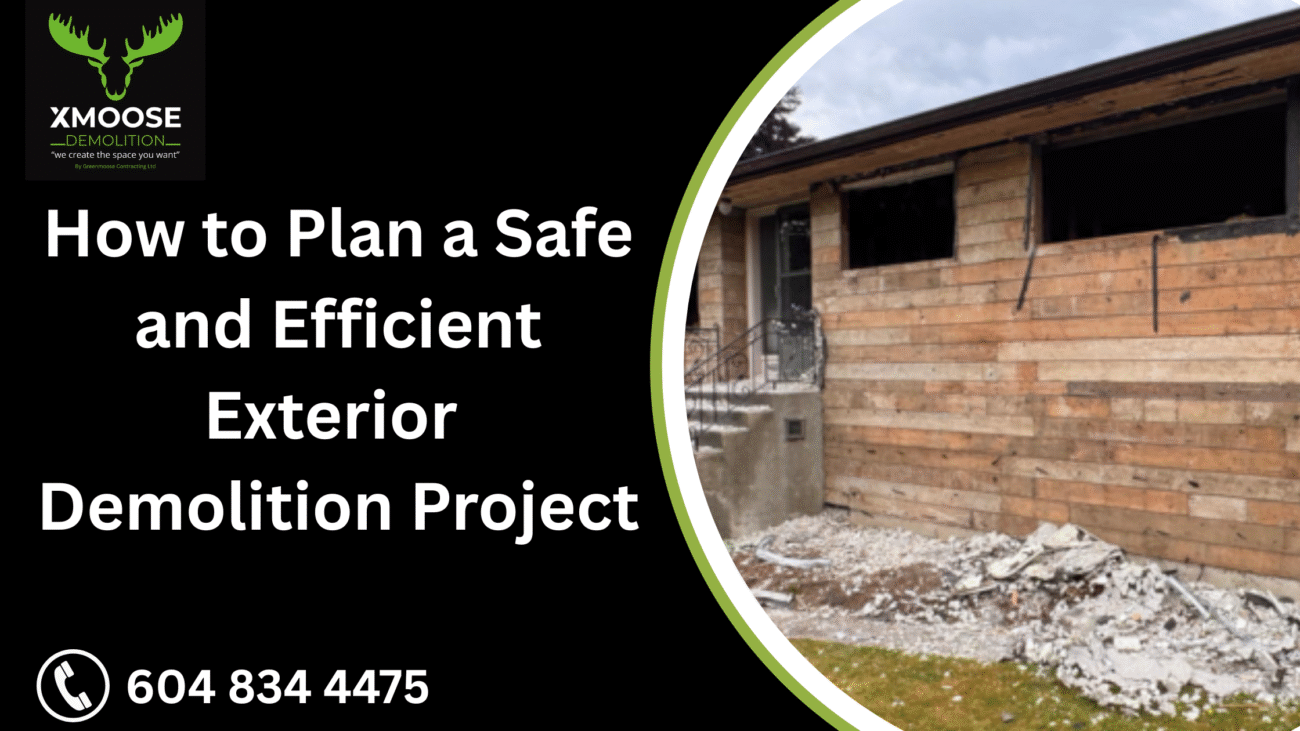


When you are planning for a reconstruction or a renovation, the very first thing to take care of will be the demolition process. In case of commercial demolition, the process has to be well-organized so that you can save money and precious time. Proper organisation and planning will keep you on schedule, comply with local regulations and also create a safe environment for workers as well as neighbouring property owners. A detailed commercial demolition checklist will not only save time, but will also reduce delays and improve the efficiency of the entire project.
In this demolition planning guide in BC, we are outlining the essential steps that you must ensure before beginning the actual demolition so that you can start the renovation project on the right foundation.
- The planning and inspection phase
Planning and thorough inspection are the very first steps you have to take care of before the actual demolition process starts. It is through thorough inspection that you will be able to identify the structural elements that require removal. This will also include evaluation of the existing utilities and assessing the materials that need special handling. It is a professional inspection specialist who will provide you with the valuable information to set a safe demolition strategy.
- Getting required permits and documents
Securing the necessary permits is another most important factor to consider before starting a commercial demolition project. Local municipalities throughout British Columbia require demolition permits before the actual work is started. You will need to have the following documents:
- Site plan.
- Demolition permit.
- Plan for renovation or redevelopment.
- Waste disposal plan.
- Contractor agreements.
- Documentation for safety and risk management.
- Notifying the required parties
There are certain parties who should be informed about a commercial demolition process. They are:
- Utility providers for gas, electricity and telecommunications.
- Local municipal authorities.
- Tenants or adjacent property owners.
- Employees and other occupants of the building.
- Contractors of the project.
- Disconnection of utilities
Arranging for utility disconnection is very important while going through the demolition process. Before beginning the demolition process, you will have to coordinate with the utility service providers like gas, electricity, water, etc., so that they can disconnect the services.
- Planning for material removal and recycling
You have to create a waste management plan so that the recyclable materials can be sorted and the general debris can be removed with efficiency. It is proper planning that supports efficient cleaning up of the demolition site and eventually maintains an organised environment during the entire process of demolition.
- Preparing the site
The demolition site has to be prepared with care and safety. Things like installation of fencing, safety signage and designated access points are important. You will also have to ensure staging areas for the equipment and the entire process has to be communicated to everyone who is involved in the project.
Careful preparation and planning is the primary requirement for a successful demolition project. When you follow a detailed commercial demolition checklist, you will surely be able to manage the project efficiently and comply to the local legal requirements.
FAQs
- Which documents do I need to start a commercial demolition project?
Documents like a demolition permit, renovation plan, overall site plan, contractor agreement, waste management plan and general safety documents are required.
- Do I have to notify my neighbour before beginning the commercial demolition?
Yes, you have to inform your neighbour before beginning the commercial demolition.
- Will it be possible to carry on with the demolition project without a plan for waste management?
No, a proper waste management plan is necessary before beginning a commercial demolition.